GBTS, Inc. is a 501(c)(3) nonprofit organization.
EIN: 85-0556325
Board
Rebecca Li, President (Chan)
David Iozzi, Treasurer (Vajrayana)
Nina La Rosa, Clerk (Theravada)
James Cordova, Director (Zen)
Vimalasara Mason-John, Director (Triratna)
Linda Modaro, Director (Theravada)
Yeshe Rose, Director (Vajrayana)
Staff
Yuh Wen Ling, Administrative Assistant
Nina La Rosa, Director

History
GBTS grew out of a conference of “NextGen” Buddhist teachers in 2011 at the Garrison Institute in upstate New York. Fueled by the joy of meeting peers learning how to practice and teach the dharma across lineages, the group decided to meet every two years. We shifted from defining the community by age, which would have had the effect of a continuously changing constituency, to defining our group by birth year. For a variety of reasons, after lively and substantive discussions, we settled on 1960 to 1982.
From the very beginning, GBTS has actively cultivated a culture of peership, viewed as the intention to put our teacher role to one side and relate to each other as friends on the path, helping each other learn and grow personally and in our profession. In addition, GBTS aims for diversity in many ways—foremost across Buddhist lineages, followed by ethnicity, race, sexual orientation, gender, and monastic/lay status.
Gathering History
2011. June 5-8. Garrison Institute, New York
Northeast. Ecumenical.
2013. June 5-9. Deer Park Monastery, California.
West Coast. Mahayana – Thien.
2015. June 6-10. Dharma Drum Retreat Center, Pine Bush, New York.
Northeast. Mahayana – Chan.
2017. June 6-11. Dharma Ocean Retreat Center, Crestone, Colorado.
Southwest. Vajrayana.
2019. June 12-16. Great Vow Zen Monastery, Clatskanie, Oregon.
Northwest. Mahayana – Zen.
2021. June 5. Online daylong.
2022. July 6-10. Won Dharma Center, upstate New York.
Northeast. Mahayana – Won.
2024. June 5-9. Great Vow Zen Monastery, Clatskanie, Oregon.
Northwest. Mahayana – Zen.
2026. June 3-7. Seven Oaks Retreat Center, Madison, Virginia. Southeast.
“There is a lot of wisdom in the room when you have a group of dedicated Buddhist practitioners sharing and learning from each other,” said Abhaya Korrigan, a Buddhist prison chaplain who has attended all the previous gatherings. “When everyone is your peer, you can be open in a way that isn’t always possible in other situations.”
Present Moment
GenX Buddhist Teachers Sangha helps our generation of Buddhist teachers meet the needs of the ever-changing Buddhist landscape in the West. We support committed, active Buddhist teachers to learn from and inspire each other by coming together as a community. Our biannual conferences welcome diversity, curiosity, integrity and reflect a strong grounding in the Dharma.
A few of our goals:
- To foster collaborative learning, respect, and community engagement for our generation of Buddhist teachers across lineages.
- To explore salient issues of teaching the dharma: including authenticity, lineage, diversity, colonialism, race, gender, ethics, and power. To foster relationship-building while exploring these issues.
- To provide support for professional development through a formalized association.
Our Gatherings have a distinct nonsectarian, pan-Buddhist character. We are dedicated to fostering communication and collaboration across different traditions of Buddhism. The conference has hosted teachers representing traditions and lineages across the Theravada, Mahayana, Vajrayana and Ekayana vehicles. In terms of geography, teachers have traveled from the United States, Canada, Mexico, the UK, and France and beyond to attend. Our four-day gatherings are also unique in their emphasis on dharma practice. In that regard, the gatherings are much like a retreat, providing much-needed renewal for many of our teachers.
Topics of gathering discussion range from the practical: utilizing online teaching resources, developing communities and training new teachers, and navigating the Buddhist publishing world; to the philosophical: the relationship of Buddhism and mindfulness, the role of form and ritual in modern practice, as well as understanding different forms of renunciation; to the personal: our own spiritual development, relationship to senior teachers, learning edges, and so much more.

2026 Gathering Planning Committee
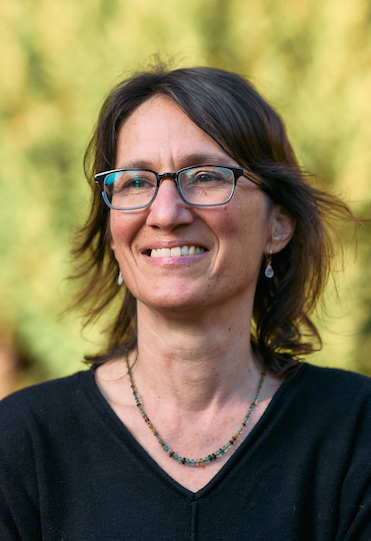
Paloma Cain, MA, (she/her) was raised in an American Buddhist family and has been formally studying and practicing since 1996, primarily in Theravadan (Thai Forest) and Tibetan (Nyingma) lineages. She is authorized to teach by Trudy Goodman and Jack Kornfield. Paloma is a Senior Teacher at InsightLA and other sanghas, served as the in-residence director of Tara Mandala Retreat Center, and trained staff in hospital settings including VA Hospitals, UCLA Hospital and Vanderbilt University Medical Center. Her work is additionally informed by her formal studies in clinical psychology, chaplaincy/spiritual care and yoga therapy. She resides with her family among the coastal redwoods of far Northern California.
Shundo David Haye (he/him) is a priest in the San Francisco Zen Center lineage of Suzuki Roshi. Originally from England, he spent fifteen years in residential practice, including five years of monastic training at Tassajara. These days he teaches out in the world, and leads regular mindful hikes around San Francisco.


Toan Ivan Mayerhofer (he/him) is a meditation, ritual, and Dharma teacher in a Ganhwa Seon lineage. He entered the temple gate in 2007 with the Buddhist Society for Compassionate Wisdom where he trained under Haju Sunim and Samu Sunim. He was ordained as a lay Dharma and meditation teacher in 2014. In 2026 at the Anguk Seonwon in Busan, South Korea, the Venerable Subul Sunim gave him the Dharma name ‘Toan’ and encouraged him to teach Ganhwa Seon. Toan currently serves as the Associate Chaplain for Buddhist Programs, Director of the Davidson Meditation Initiative, and Interfaith Coordinator at Davidson College. Always a student and practitioner first, Toan strives to promote Buddhism, especially Korean Buddhism, for the benefit and liberation of all beings.
Venerable Burin Thitakusalo (he/him) or Monk Burin is the Abbot of The Middle Way Temple, New York, the first Theravada Buddhist temple in Manhattan. He is also the Executive Director of The Middle Way Institute, a global non-profit educational organization that extracts ancient wisdom from Buddha’s Teachings to create modern solutions for humanity. As a Thai Theravada Buddhist monk, he has worked tirelessly since 2000 to deliver the profound wisdom of Buddha’s Teachings in the most engaging and practical way to people of all ages, races, religions, and no religion. He travels globally to impact practitioners of 31 countries in 6 continents, including business leaders who take executive education courses at Harvard Business School. Young kids in New York who come to learn Buddhism with him, call him “An Orange Man.”

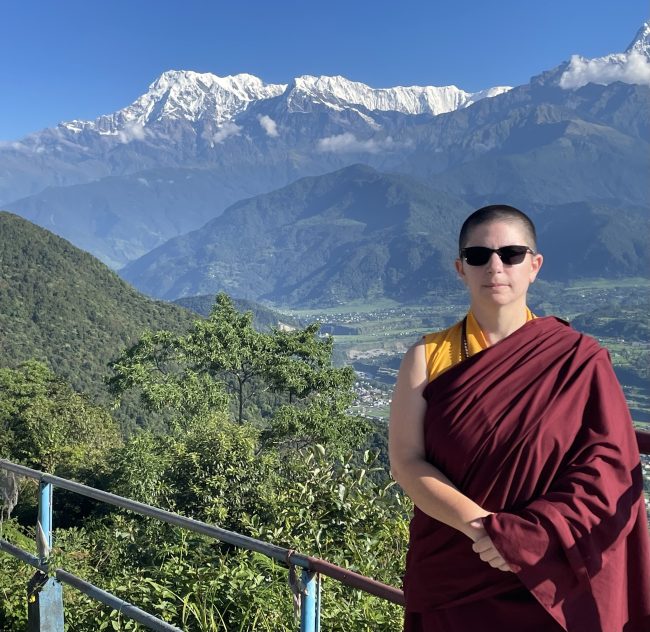
Lama Zangmo (they/them) is a meditation practitioner and teacher in the Tibetan Buddhist tradition. They completed three consecutive three-year retreats at Palpung Thubten Choling in upstate New York and primarily reside there as a member of the monastic community. They are currently pursuing a masters level degree in Buddhist philosophy and meditation at Yongey Mingyur Rinpoche’s Tergar Institute in Kathmandu, Nepal. “Dharma on the Margins” is their work in progress, finding ways to make the Buddhist teachings accessible and available to everyone, everywhere.
 genxdharma.com